
A Start on a More General Bibliography

Last post I mentioned starting work on a bibliography more general than my bibliography for massage practitioners. I’ve now got a gateway page and a limited number of content entries for the general bibliography up and running. The listings in so far are mostly on freelancing and writing but that will expand with a little more time. To a large extent, I’m simply cataloging my personal library.

The gateway page has a number of links to external resources.

More Entrepreneurial Transition Resources

One of the books I’d gotten when I’d started thinking seriously of freelance writing a couple of years ago was Media Bistro’s first book — “Get a Freelance Life” by Margit Feury Ragland. I didn’t note it when I mentioned Media Bistro a few days ago, but the website includes sections for jobs and profiles, and also information on resume creation.

This morning, also, my periodic email update from Harvard Business School’s free newsletter “Working Knowledge” hit my inbox. The Working Knowledge website includes a section on entrepreneurship. I also ran into a NY Times small business article, Getting Paid, One Way or Another, part of the NYT’s small business resources. These include, Marci Alboher’s blog on Shifting Careers.

Also, back in February, the New Scientist had an article on science specific MBA’s: Science entrepreneurs need better business skills. My own mucking around in learning theory would indicate that the bottom line is to pick an efficient means of learning the concepts, vocabulary, and ability of use. There was also an article on Physics and Entrepreneurship in the February 2001 issue of The Industrial Physicist (no longer in publication).

Yesterday, I picked up two books, Consulting for Dummies and Larry Ullman’s PHP 6 and MySQL 5 for Dynamic Web Sites: Visual QuickPro Guide. Both struck me as being no-hype/high-content ways to brush up on their respective topic areas.

There’s also a good series of business and finance books put out by The Economist. Among them are:

About a year ago, I resurrected my Bibliography for Massage Practitioners. Last night, I started merging some of the technology in my homepage with that in the bibliography. The massage bibliography, which was created just prior to implementing my current homepage design, will also get an update to include the navigation menu. The home page uses server side includes a lot while the bibliography uses PHP and XSLT to translate the underlying XML to HTML. Last night I worked out the bibliography template, using PHP includes and replacing the server LAST_MODIFIED option with the PHP SERVER_[‘PHP_SELF’] and a call to ‘filemtime’.

The motivation for all of this isn’t just to improve the massage bibliography. I’ll be bringing up a more general bibliography to include sections on consulting, web development, … It will also have in it the various books given above. In the meantime, the business section of the current bibliography does include a number of general books on entrepreneurship — material on networking, working a room, running a one-person business, writing business plans, …

As a final note, for those looking for short term assignments, Craigslist has a section called “Gigs” toward the bottom of the page, with subsections on writing and computer tasks. Here’s the SF Bay edition.

On the Infungibility of Scientists

My prior comment on the infungibility of scientists reminding me about the work of economist W. Brian Arthur that I’d read about in Mitchell Waldrop’s book “Complexity: The Emerging Science at the Edge of Order and Chaos”. Arthur is noted for his work on increasing returns in economies, and how these increasing returns magnify small, random occurrences in the market place. Arthur had realized that the classical economics of diminishing returns (i.e. negative feedbacks), while suitable to fungible commodity markets, didn’t work in the technology sector. In the latter, a successful early entry could “capture” the market in a scenario of increasing returns (i.e. positive feedbacks), even to the point of eliminating a better solution from the technological standpoint. In other words, the market would choose the early rather than the best solution, contradicting the economic wisdom of the time. This type of “winner take all” scenario also shows up in summary articles and papers by Albert-László Barabási on Bose-Einstein condensation in complex networks. Barabási also provides a summary discussion of this effect in his book “Linked: How Everything Is Connected to Everything Else and What It Means”.

The point for the individuality of scientists is that their influence will depend both on when they entered an area of research and the network connections of concepts and colleagues in which they are immersed. In short, being a scientist is the kind of context-dependent economy/network described independently by Arthur and Barabási. This has profound implications on the type of environment required to both produce and maintain the “best and the brightest” in science. It is not a commodity market, nor is it a military, rule-based environment. In the much discussed push for U.S. competitiveness in the global arena, this may be a lesson only learned the hard way by those creating the current national laboratory environment.

The Need for Slack

The comments in my last entry on tightening funding and schedules, reminded me of several conversations I’ve had with colleagues regarding the need for creative slack to remain productive.

Tom DeMarco explored this in his book, “Slack: Getting Past Burnout, Busywork, and the Myth of Total Efficiency” I also came across a fairly long and comprehensive paper by Herold et al. (2006). What is the relationship between organizational slack and innovation? Journal of Managerial Issues.

Further back, Dr. Joseph Bordogna (NSF) gave a commencement address in 1997 on “Unexpected Turns, Unprecedented Opportunities”. Bordogna mentions the work of the noted Japanese management expert, Ikujiro Nonaka, who had just became UC Berkeley’s first ever “Professor of Knowledge”. He also quotes from an Economist article. I found that article in the 29 May 1997 issue under the title “Mr. Knowledge”. The two paragraphs quoted below hold high relevance (in their violation) for the conditions and “occurrences” at LLNL that I’ve recently described.

When set beside most modern American writers, Mr Nonaka’s thoughts about knowledge seem different in at least two ways. The first is his relative lack of interest in information technology. Many American companies equate “knowledge creation” with setting up computer databases. Mr Nonaka argues that much of a company’s knowledge bank has nothing to do with data, but is based on informal “on-the-job” knowledge—everything from the name of a customer’s secretary to the best way to deal with a truculent supplier. Many of these tidbits are stored in the brains of middle managers—exactly the people whom re-engineering replaced with computers.

The second thing that makes Mr Nonaka stand out is his insistence that companies need plenty of slack to remain creative. Allow employees time to pursue hare-brained schemes—or just to sit around chatting—and you may come up with a market-changing idea, argues Mr Nonaka; force them to account for every minute of their day, and you will be stuck with routine products.

The Limits of Professional Commitment

My recent ejection out of the mainstream of LLNL projects has underscored the limits of personal professionalism. Last fall, with the management transition from the University of California (UC) to the new LLC, I had accepted the job with the new management, retired from UC two days after the transition, and then cut back to half-time. Partly this was fire-proofing myself against what I suspected would be an upcoming period of turbulence and instability. Partly I wanted to make a window of time to pursue more writing. But there was more.

Over the past decade, funding has become more and more marginal and more and more directed toward immediate implementation. In a research environment, this can become very counterproductive. Often, first implementations (or even second) don’t work as expected. Progress requires time to ponder, time to consider underlying causes and explore them, and colleagues willing and able to engage in creative discussion. Those conditions were less and less available. Increasingly, I and my colleagues were stretched thin over multiple and over-promised projects. The inevitable result, over years of this, was simply cumulative fatigue. I found myself, whether I liked it or not (and I didn’t), slipping on commitments. I found that the time to even read an issue of EOS or SIAM News had disappeared. When I had an opportunity to cut back on my time, I took it. I wanted to remain a productive physicist rather than continue my transition into a fog-headed zombie. This might have worked, but the turbulence got me first.

In the days preceding the layoff date, I took the precaution of transferring a number of sets of project files and collections of article PDF files to colleagues. If I were eliminated (which happened), at least some of the code development, simulations done, and information collected would remain. Yet there are limits to professional commitment; much simply will be left half-formed, half-done, and become lost. It is my professional responsibility to do what I can in the face of everything, not to protect an organization from itself; the lab will succeed or fail on its own merits or limitations. My commitment is not to the organization but to my colleagues; caught in the swirls of chaos a much as I am. It has been a week of reminding myself of and practicing the Zen philosophy of doing what needs to be done and remaining unattached to the results.

Being peace and bringing full awareness is the way for activists to develop the most effective strategies for making peace. Paradoxically, these strategies are most effective precisely because a Buddha does not try to control their outcome. A Buddha understands that, because all reality is interconnected, there is no way to step outside of the situation in this moment in order to get control of it. Every effort to get that kind of illusory control only exacerbates conflict and violence. Rather, a Buddha lives fully in the present, doing what needs to be done in the immediate moment to ease suffering. “If we do our best, in full awareness and with a heart free from anger, we cannot worry about results.” Giving full awareness to the present moment, and being peace in that moment, is the best way to bring peace for the future. There can be no peace in the future if people are not peaceful in the present. — Ira Chernus on Thich Nhat Hahn

Roadkill & Resurrection — After a Week

A week after becoming “roadkill” in LLNL’s involuntary separation process, life goes on. During the past week, I’ve filed a fictitious business name under which to do technical consulting, and rounded up the required two sponsors and sent in my membership application to the National Association of Science Writers (NASW). The latter is a delayed follow-up to taking the Santa Fe Science Writers Workshop in 2007.

I’ve also updated my View Keith Eric Grant's profile on LinkedIn to reflect my new freelance and consulting orientation and used LinkedIn as a means of collecting contact information on colleagues: those still at LLNL, those leaving under the ISP, those who left earlier, and those in other places and professions. I’d already been doing this, but now, since leaving Lawrence Livermore National Lab, I’m a lot more conscious and thorough about keeping contacts potentially useful to myself or my connections. In short, I’m extending my existing tendency to be an information hub. I also dropped by Media Bistro, the American Society of Journalists & Authors (ASJA), and the INC, One-Person Business page. I’ve now got at least an approximate handle on what I’ll need to charge for technical consulting. I still haven’t a clue on how this will all work out, but I’m on my way to becoming the “Roadkill Warrior”.

During the week, the theme of “Roadkill & Resurrection” caught the inspiration of my older son. Normally a trumpet player in the high school band, he’s been spending some time at our digital piano figuring out a musical theme for what he refers to as “The Armadillo Song”. Last night, he decided that it had three movements: “The Crash”, “Ascension”, and “Life Starts Over”.

For others in transition, I can recommend a couple of resources. The first is Deep Survival by Laurence Gonzales. At the minimum, read the “12 Rules of Survival”. The second is “The Way of Transition” by William Bridges. Both of these are also listed in the Trauma, Stress & Survival Section of an annotated bibliography I maintain. Deep survival had been recommended to me several years back by my colleague Maureen Manley, who used to be my sports and deep tissue massage teaching partner at the McKinnon Institute. I’d also run into William Bridges books several years back, notably for his book “Job Shift”.

I’d long ago realized that, even at a national laboratory, one has to be prepared to be one’s own entrepreneur. As I’ve been funded by or working for several divisions over the years, I’ve taken on the attitude of being a “hired gun”. That attitude of preparation and self-responsibility has helped a lot in this latest transition out of the lab. I’d seen the problems coming and prepared for them. I stayed as long as I did, because I enjoyed the mental challenges and some really great colleagues, realizing that the organization had long been losing any trappings of being primarily in service to the pursuit of science.

Science and scientific vision have become secondary to avoidance of risk at the lab. It’s not that some good science isn’t done, but that it’s done as much despite the infrastructure as because of it. There’s simply too much sand in the gears to now consider it a place to have a career as a scientist. This orientation, however, starts at levels well above the laboratory itself; the lab is just a reflection of a greater national dysfunction. I may be lucky to be thrown clear with all limbs intact, even with some very deep cumulative fatigue. Changes at the lab have reminded me for far too long of the story of the Boiling Frog.

“The boiling frog story states that a frog can be boiled alive if the water is heated slowly enough — it is said that if a frog is placed in boiling water, it will jump out, but if it is placed in cold water that is slowly heated, it will never jump out. The story is generally told in a figurative context, with the upshot being that people should make themselves aware of gradual change lest they suffer a catastrophic loss.” — Wikipedia

Fossil Fuel Emissions Verification

View Keith Eric Grant's profile on LinkedIn Back in April, while still at LLNL, I was working on a proposed project to improve methods and observations for fossil fuel emissions verification (FFEV). AB32, California’s landmark climate change legislation, requires fossil fuel emissions verification, as well as including mandatory source reporting. Part of FFEV is modeling where emissions are transported by winds. This video-only animation shows such a simulation for emissions from LA (red) and San Francisco (blue) for the first week of January 2006. Several wind patterns can be seen during the week.

I made the original individual graphics images using IDL’s object-oriented volume rendering. The individual images, as was the model output, were three hours apart. The opacity for the the LA and SF air basin emissions increases nonlinearly with the concentrations. I used a gamma correction of 1.5 to create a display that showed concentration details away from the source without filling the entire display. The animation was created by importing the still images into Adobe Premiere Elements and using a dissolve time between images equal to the image display time. The result was a continual interpolation in time rather than a “slide-show” appearance.

Wind flow modeling, as displayed in this video, is only part of FFEV. Bottom-up source estimates are made from reporting of the types of fuel being used and how the fuel is burned. This can vary from season to season and from region to region in California. A model, such as WRF-Chem, along with analyzed wind fields, is used to turn the source estimates into concentration estimates. The concentration estimates can then be compared with actual measurements of local carbon dioxide. Inverse problem mathematics then allow using the discrepancy between the concentration estimates and the actual measurements to improve the estimates of the emissions. By including measurements of different carbon isotopes, more information can be gained about the strengths of fossil fuel sources and biogenic sources and sinks. For example, because all the carbon-14 in fossil fuel has decayed away (5700 year half-life), burning fossil fuel creates a carbon-14 “hole”. This is called the “Suess Effect”, after Hans Suess. The high accuracy isotope measurements are based on the technology at the Center for Accelerator Mass Spectrometry (CAMS). Tom Guilderson of CAMS is heading the proposal and would be the contact for more information.

A New Peer-Reviewed Massage Therapy Journal

The Massage Therapy Foundation (MTF) is launching a new peer-reviewed, open-access, online journal — the International Journal of Therapeutic Massage & Bodywork: Research, Education, & Practice. The first edition is scheduled for August. As co-chair of the MTF’s Best Practices Committee, I submitted a 33 page paper to the editor today covering the committee’s work over the last two+ years — Steps toward Massage Therapy Guidelines: A First Report to the Profession.

Abstract

Over the last two decades, the massage profession has grown rapidly. As it does with business startups that begin informally and successfully grow into mature enterprises, growth brings new organizational challenges along with greater visibility and opportunity. The maturation of massage as a healthcare profession creates an increasing need for a process to formalize the synthesis of massage therapy knowledge from clinical experience and research. As a profession, we need more expedient means to collect what we know and to make such baseline knowledge widely available to practitioners, consumers, and other healthcare stakeholders. In short, we need to create a process for creating guidelines.

This paper lays out the motivations and framework for creating guidelines for massage therapy that are informed both by research and clinical experience. It represents a report to the massage therapy profession of the work of the Best Practices Committee (BPC) of the Massage Therapy Foundation over the previous two years. The concept of guidelines is discussed based on a definition from the Institute of Medicine (IOM) and research on the nature of expertise. Guidelines are targeted for submission to the National Guideline Clearinghouse. Challenges in creating guidelines for massage therapy are discussed. Different stakeholders are considered, with their needs and potential benefits from guidelines presented as scenarios. Current literature from the wider scope of healthcare is extensively reviewed. Topics include guideline creation, credentialing of complementary and alternative medicine (CAM) practitioners, definition of competence, and the increasing role of technology (i.e. informatics) in managing training and task-necessary competencies. At first glance separate, these topics are interlinked by a healthcare quality initiative from the IOM, by a resultant process of healthcare self-reflection, and by extensive defense and technology industry efforts to create new capabilities and data standards for learning and competency communication and management. Finally, a process for creation of massage therapy guidelines is proposed. A central feature of the proposal is the use of the “World Café” process to elicit knowledge and solutions from a diverse collection of experts. The role of transparency and a wide and open peer-review is stressed as essential to the usability and credibility of guidelines.

Hopefully, it will be something to look forward to come August. In any case, it’s nice to have it out the door and onward to the reviewers. While packing boxes in my lab office was occupying my days, pulling the paper into shape was occupying my late evenings. It was a joint project, with the internal committee reviews, comments, and reworking done by wiki. It also represents a lot of email and over two years of monthly conference calls.

The Willingness to Risk Failure

My last post quoted from Siegfried Hecker’s testimony on 30 April 2008 before the Water and Energy subcommittee of the Senate Appropriations Committee. Hecker’s statement on risk aversion reminded me of a Science editorial by Harold T. Shapiro, “The Willingness to Risk Failure”. Shapiro opened the editorial, drawn from a prior commencement address, with:

Let me focus for a moment on the willingness to take informed risks. The willingness to risk failure is an essential component of most successful initiatives. The unwillingness to face the risks of failure-or an excessive zeal to avoid all risks-is, in the end, an acceptance of mediocrity and an abdication of leadership. To use a sports metaphor, if you do not come to bat at all, or, when at bat, wait hopefully for a walk, you cannot hit a home run. At best, you can get to first base. Major leaguers can decide to play in the minor leagues, and they may have more hits and fewer failures there, but their impact on the game and on society would be very much diminished. The risk of failure is intrinsic to significant accomplishment. Even the great Babe Ruth struck out almost twice as often as he hit home runs. Successful change depends on experimentation with uncertain results. A willingness to occupy new ground always involves the risk of losing your footing along the way.

Now, when you take risks, there is always the chance that things don’t work out simply. If one already knew the outcome, it wouldn’t be research. It also is more likely that one will have to spend some time exploring the “phase space” of the problem for a while — it isn’t just linear implementation. What I’ve seen, over the years, is that schedules have simply become tighter, there is less time to ponder the underlying science, and fewer and fewer colleagues with the knowledge or time to engage in creative discussions. There is also simply less time and little funds to engage in the larger academic world of problem area specific working groups on the national and international arena. So, what I mentioned in my last post about pursuing scientific careers is, at the bottom level, about time, stable funding, and funding agencies willing to take risks on new ideas and people moving between endeavor areas to enable the synthesis of existing knowledge and the creation of new knowledge. It simply isn’t going to happen with fractional person funding and scientists tired out of their skulls with short-term implementation deadlines. Those who get this, in whatever geographical location, will win the competitiveness prize.

Given Harold Shapiro’s use of a baseball metaphor, I also can’t resist adding a quote I picked up years back from a Lawrence Berkeley Laboratory computer center newsletter. This was back when I was a graduate student working on the Livermore Regional Air Quality Model (LIRAQ), with the implementation done at LBL.

The way I see it, you can treat your life like a fastball or a knuckleball, that’s the choice. Now a fastball pitcher grabs tight on the ball, throws it as far as he can, it spins through the air in a straight line, the batter knows where it’s heading and either he can hit it or he can’t. A knuckleball pitcher just lets the ball go, holds it with his middle two knuckles like a claw and lets go, no spin and no straight line. It floats toward the batter and any little breeze can make it do something else, and there’s always a little breeze and the knuckleball surprises the catcher (who has to use a bigger glove and misses a lot anyway), the batter, and the pitcher and the ball. Knuckleball pitchers can pitch a lot more years than fastball pitchers, but there aren’t very many of them. — Anne Herbert.

Writer Anne Herbert (coevolutionary quarterly, whole earth review) is also attributed with coining the phrase “Practice random kindness and senseless acts of beauty.”

Roadkill & Resurrection — post LLNL Entrepreneurship

Armadillo RoadkillFor thirty-six years, I was a physicist at the Lawrence Livermore National Laboratory (LLNL), most of the time spent doing some variation of atmospheric science and simulation with an extended foray into nonlinear solvers. But no more. As of last Friday, I became part of the “road-kill” in a process of lab downsizing. Following a congressionally-forced transition last October from management by the University of California (for fifty years) to management to a newly coined LLC, I’d foreseen the likelihood of “clear-air turbulence” and planned accordingly. I was in a position to substantially compensate against loss of position and did. Others weren’t as fortunate.

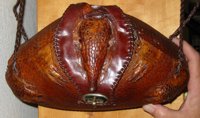
View Keith Eric Grant's profile on LinkedIn While, I expect a few ups and downs, I’m already starting the process of “resurrection” into freelancing and consulting — not to imply that I’m anywhere near clear yet on all the details, but that will come. The road-kill armadillo above has already become a symbol for the process. My wife was at an antique fair today, saw an armadillo purse, and came home with it. It’s now hanging on a bookcase.Armadillo Purse
I would lay part of the blame for all of this on the LLC itself. Some of the increases in operation costs should have been anticipated. An increase in per person health plan costs in going from a large, full-state, university to a single-campus northern California business is one of those. That more people would choose portability in retirement plans than did at a similar transition for LANL could also have been forecast. The SF Bay Area holds far more options for job portability than does Los Alamos. Someone in the planning for the management contract bid, simply missed the mark widely. It also may well be that the bid, as framed, wasn’t economically feasible to begin with. The fiscally responsible response may have been simply not to bid, but that’s now history. The main problems do, however, come not from the LLC but from U.S. attitudes and from the short-sightedness of congressional planning.

I’d previously blogged on U.S. attitudes to science and higher learning under Can we “save” science in a culture of anti-intellectualism? The planning part comes in science funding having been flat for years, which, with inflation, means continually decreasing. That has led to the reports noted in my prior blog post and to the National Academy report Rising Above the Gathering Storm (RAGS) on U.S. competitiveness. While many promises have been made, an article in the the 8 May issue of Nature notes that “The Gathering Storm Rages On”. A similar article in the 9 May issue of Science notes that “Going From RAGS to Riches Is Proving to Be Very Difficult”. Many scientific institutions are having difficulties and layoffs under the current system of too little and too late funding; it isn’t just a national laboratory issue. On the other hand, national laboratories, because of the scope of interdisciplinary research they attempt, are likely more vulnerable to increased costs from micromanagement by the Department of Energy and failures from marginal funding. These issues came out in a 30 April hearing of the Senate subcommittee on water and energy which you can watch. About 2 hours into a 2:13 hearing they discuss lab funding. At about 2:09, Siegfried Hecker, former director of Los Alamos, makes a pretty direct statement of degradation of scientific environment.

“When we went the direction of contractorization we made a grievous error pushing the laboratories in a direction that simply isn’t right for this country and we’ve suffered from that. The whole environment at these laboratories has changed.

Secondly, over the last… I would say now sixteen years, the regulatory environment at these laboratories has become so risk averse that we essentially can’t get work done anymore. In 1965 I came to Los Alamos as a young student because it was the best place to go work.

Unfortunately, these laboratories today are not the best places to go work anymore. And we need to make them such. And just more money doesn’t do the trick. We have to change the working environment to allow people to get their work done. These places nowadays look more like prisons than they do like university campuses or something in between, which is what we tried to make them. Attract the best, protect the most important. We’ve lost a sense of all that.

That’s one of the reasons why these laboratories are suffering today.

Mr. Chairman, when you say the system is broken, it’s broken in many different ways and we should fix it, I agree.

The issue, not yet obvious to congress, is that scientists are not fungible items. If the environment isn’t conducive to scientific careers and thinking, desirable people simply won’t come (or will leave quickly). It takes years to get expertise. If the stability needed to conduct a scientific career isn’t evident, not only won’t scientists hire on at the national laboratories, they may decide to ply careers in other areas. My older son, a sophomore in high school, looked at me in the middle of last week and said, “Dad, should I even bother taking physics?” I think that the answer is “yes”, but not necessarily to become a scientist.

In any case, I’ll be clear of the havoc, no longer having to fill out my funding between multiple divisions in increments of 0.2 or 0.3, each project in itself being over-promised to begin with. A decade of being stretched thin has left behind cumulative fatigue and the profound need for a recovery break. I know that I, once the fatigue lifts, can find resurrection of interest and reconstruction of places to apply my skills. The case for the national laboratories isn’t that clear; will they regain their balance or end up riding the failure cascade. If the U.S. can’t decide that they really are an important resource; if the management can’t be arranged to serve the science rather than vice versa, the answer will more likely be the cascade rather than the recovery. Such a failure could easily take a decade to reverse.

A failure cascade is a ‘tipping point.’ Once the point has been reached, failures by an organization cause stresses that lead to more failure, at an ever-increasing pace.”